
-
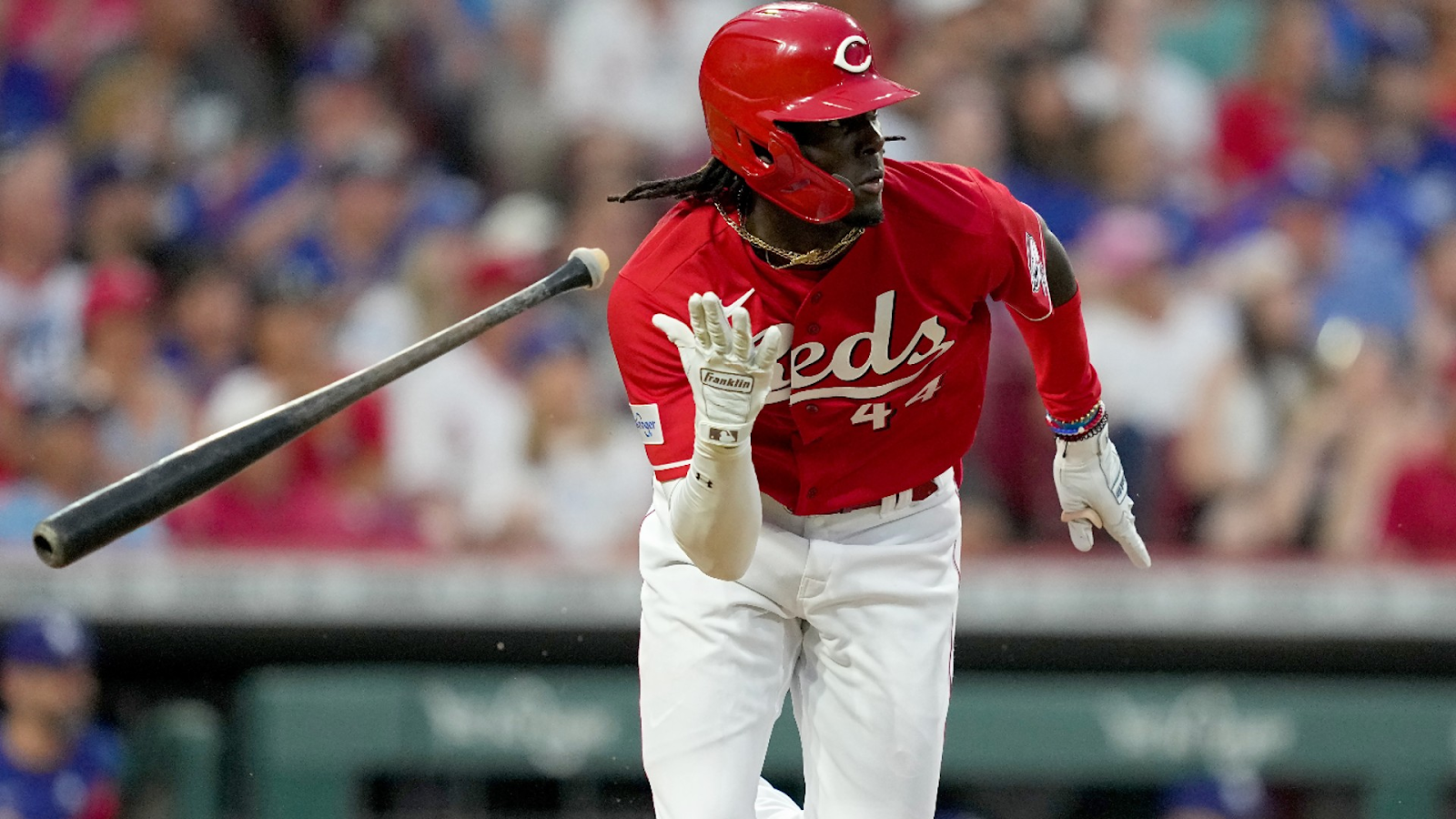
Cincinnati, OH — In just his first MLB series, Elly De La Cruz, the Cincinnati Reds’ top prospect and #4 overall prospect (according to MLB Pipeline), has made the headlines and sparked attention from fans across the nation. The Reds’ switch hitter has gotten off to a hot start in the Majors with a .364/.462/.909 slash line with 1 home run (HR), 1 stolen base (SB), and 2 runs batted in (RBIs). So how did this future MLB superstar become such a freak of nature?
Elly De La Cruz signed with the Cincinnati Reds on July 2, 2018, as an international free agent for a reported $65,000 from the Dominican Republic. De La Cruz started off his professional career with the Dominican Summer League Reds in 2019. De La Cruz did not play baseball the following season due to the COVID-19 Pandemic. De La Cruz started turning heads in Double-A in 2022 where he racked up 28 HRs and stole 47 bases in 121 games played. De La Cruz started the 2023 season in Triple-A with the Louisville Bats before being called up for his Major League debut on June 6, 2023.
In his first Major League game, De La Cruz ripped a double into right-center field with a tracked exit velocity of 112 MPH for his first Major League hit. To put that number into context, the average exit velocity is around 88 MPH. De La Cruz also earned 2 walks on the night.
De La Cruz became even more popular after his second Major League game, where he crushed his first career home run. De La Cruz smacked a 458 ft. HR with an exit velocity of 114.8 MPH off opposing Dodgers’ pitcher, Noah Syndergaard. To cap off a huge night at the plate, De La Cruz hit a triple into the gap, where he showed off his electrifying speed.
After the game, De La Cruz secured his first career home run from the fan who caught it on the receiving end. Alex French, a high school student from Archbishop Moeller High School in Ohio, was the lucky fan who caught De La Cruz’s first home run and said, “I just want to do the right thing. I want him to have it.” In exchange for the baseball, Alex French and his friends got to meet Elly De La Cruz and take a photo with him.
In the final game of his Major League debut series against the Dodgers, De La Cruz recorded a single and his first career stolen base. While De La Cruz struck out 3 times, he also showcased his switch-hitting ability and speed as he flew around the bases.
Throughout his first Major League series against the Dodgers, the 21-year-old, switch-hitting 3rd baseman has displayed his true potential as a future superstar, showcasing his raw power and electric speed. De La Cruz has recorded the two hardest-hit balls of the year for the Reds, the longest home run for the Reds, and the fastest triple in the MLB this season. With a bright future ahead of him, De La Cruz has already impressed many Reds fans, creating a frenzy to purchase his jersey.
Matthew Suh is a staff writer and contributor for The Bell Online, Fresh Coast Sports, and The Press Box. He is passionate about the intersection of sports and culture and loves to explore the stories behind the games. Follow Matthew on Twitter @matthewsuh.
-

San Francisco — “HIGH DRIVE, LEFT-CENTER FIELD, OUTTA HERE” announced Giants broadcaster, Duane Kuiper, as Casey Schmitt launched a 92 MPH sinker to the outfield bleachers in just his second major league at-bat. When the Giants called up Schmitt, he was their #4 overall ranked prospect in their farm system. Schmitt, age 24, was drafted by the Giants in the second round of the 2020 MLB Draft out of San Diego State University, where he played third base and closer.
While Schmitt was expected to join the Giants’ big league roster at the beginning of the season (after he performed well in Spring Training), the Giants sent him down to Triple-A for a few weeks before calling him up. In 32 games on the Giants Triple-A affiliate, the Sacramento Rivercats, Schmitt slashed .313/.352/.410 driving in 22 runs in 134 at-bats this season.
What impressed scouts and Giants staff even more than Schmitt’s hitting metrics, was his ability to field and versatility. This season, the Giants moved Schmitt around the infield after primarily playing third base in college, Single-A, and Double-A. Schmitt played 20 games at shortstop, 9 games at third base, and 3 games at second base. Schmitt’s ability to play multiple positions in the infield gives Giants manager, Gabe Kapler, some flexibility when creating starting lineups.
In his MLB debut, Schmitt made sure to provide fireworks for his friends and family that traveled up north from San Diego and some from North Carolina. Even Casey’s 84-year-old grandmother made the trip up to San Francisco to witness her grandson’s debut. Schmitt’s first big-league at-bat ended in a routine groundball to Nationals shortstop, C.J. Abrams. However, in Schmitt’s second big-league at-bat, he crushed a 92 MPH sinker to the left-center field bleachers against opposing pitcher, Patrick Corbin, causing his friends and family to erupt and celebrate. On the night, Schmitt finished 2-4 with 1 RBI.

According to NBC Sports Bay Area, Casey Schmitt was the youngest San Francisco Giant to homer in his MLB debut since Will Clark on April 8, 1986. Also, Schmitt is just the 19th San Francisco Giants player to have his first MLB hit be a home run. Other Giants that have accomplished this include: Orlando Cepeda (1958), Will Clark (1986), Brandon Crawford (2011), and Adam Duvall (2014).
After the game, Schmitt met up with the fan who was on the receiving end of his first big-league home run. Eli Simon, age 10, from Bernal Heights in San Francisco, snagged Schmitt’s first career MLB home run ball and gave it to Schmitt in exchange for a signed ball and a bat.
Casey Schmitt is a promising young talent who has a bright future in the MLB. Both his offensive and defensive skills have impressed many within the Giants organization, making him a valuable asset. After his exciting MLB debut, Schmitt has already made a name for himself and it will be exciting to see what the future holds for this young and exciting rookie.
Matthew Suh is a staff writer and contributor for The Bell Online, Fresh Coast Sports, and The Press Box. He is passionate about the intersection of sports and culture and loves to explore the stories behind the games. Follow Matthew on Twitter @matthewsuh.
-
The story of how an underrated RB out of University of Louisiana at Lafayette was discovered by a data analytics department in San Francisco.
SANTA CLARA, CA — 37%. This is the percentage of players who are considered “useless” after being drafted by an NFL team. “Useless” means they either didn’t play much while on the team or were outright cut from the team after being drafted. So how did the 49ers find a diamond in the rough in the 6th round of the 2021 NFL Draft? The answer lies in data analytics.
Demitrius Washington, now VP of Football Operations for the Minnesota Vikings, used to be the Manager of Football Research and Development for the 49ers. One day, after utilizing his metrics and researching players to take in the upcoming NFL Draft, Washington landed on Elijah Mitchell, whose numbers and metrics told Washington that he was the best outside zone running back. Because Washington didn’t want to approach 49ers Head Coach Kyle Shanahan with just a bunch of numbers on a piece of paper, he asked Ran Carthon, former 49ers Director of Player Personnel, to review Elijah Mitchell’s college tape to confirm that the data was “telling the truth.” Ran Carthon reviewed the tape and confirmed that the data aligned with the tape.
In addition, first-year defensive coordinator Demeco Ryans was set on drafting a LB (linebacker) in the 6th round of the 2021 NFL Draft before walking into the 49ers’ draft room and seeing Elijah Mitchell’s tape. After watching some of Elijah Mitchell’s tape, Demeco Ryans called up the 49ers linebackers coach, Johnny Holland, to let him know that the 49ers had changed their mind and were gonna draft RB Elijah Mitchell instead of the LB (linebacker) they were planning to take.
After being drafted by the 49ers, Elijah Mitchell exploded in his rookie year, rushing for 963 yards on 207 rush attempts with 5 rushing TDs. Mitchell averaged 87.5 yards per game and 4.7 yards per attempt in just his first year. Additionally, Mitchell racked up 19 receptions on 20 targets with 1 receiving TD, helping lead the San Francisco 49ers to the NFC Championship Game in 2021.
On January 2, 2022 Elijah Mitchell broke the San Francisco 49ers single-season rookie rushing record with 878 rushing yards in 10 games, surpassing Vic Washington’s record of 811 yards in 14 games in 1971.
Drafting players in the NFL has always been a daunting task, but with the help of data analytics, it has allowed NFL teams to identify potential sleepers and undervalued players such as Elijah Mitchell. Demetrius Washington and the whole San Francisco 49ers data analytics department should be proud of their accomplishment.
Matthew Suh is a staff writer and contributor for Fresh Coast Sports, Talking Points Sports, and The Press Box. While Matthew covers football, basketball, and baseball, he tends to focus on writing about the MLB and baseball. Questions about the MLB or baseball? Follow Matthew on Twitter @matthewsuh for inquiries.
-
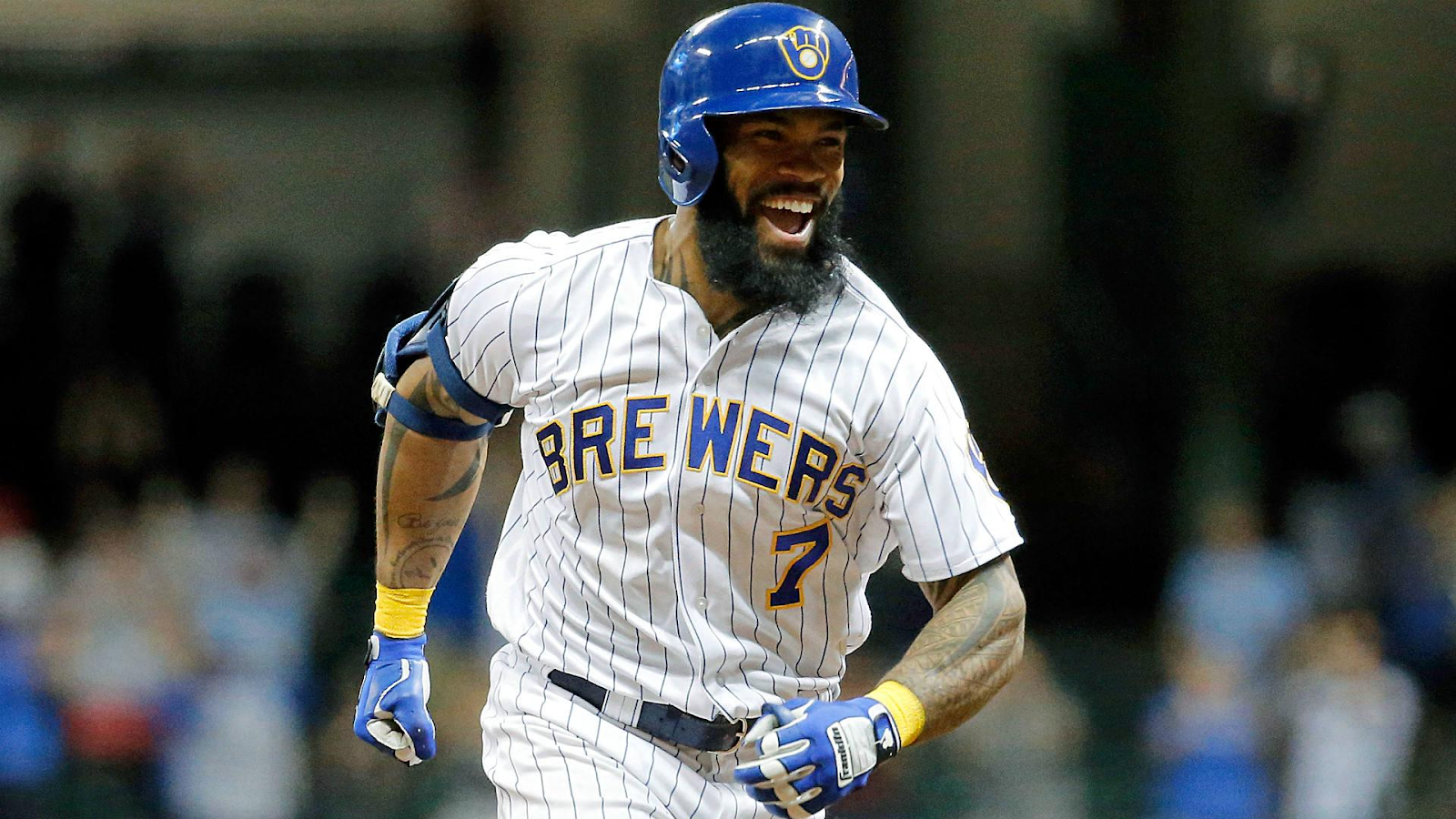
SAN JOSE, CA — “The day has finally come! In the year of our lord, twenty, twenty-three…HE GONE!” These are the words from MLB slugger and former Bellarmine College Prep Baseball player Eric Thames in his latest Instagram post announcing his retirement from professional baseball.
Thames played professional baseball in six different countries (U.S., Canada, South Korea, Taiwan, Venezuela, and Japan) and played for six different clubs in the MLB (Baltimore, Houston, Milwaukee, Toronto, Seattle, and Washington).
Eric Allyn Thames grew up in Santa Clara, CA, and attended Bellarmine College Preparatory for high school. At Bellarmine, Thames joined the varsity baseball team in his junior year, where he was named an All-League player for two years and an MVP in his senior year in 2004. While talking about Eric Thames’ retirement, one student who used to attend Bellarmine wrote, “Those of us lucky enough to go to BCP at the same time as him remember him hitting balls over the train tracks during BP and the home run derby. A true spectacle for so young.”
Thames first attended West Valley Community College after not getting much playing time at Cabrillo College. Thames later transferred to Pepperdine University, where the Toronto Blue Jays later drafted him out of college. From the Blue Jays, Thames then played short stints with the Mariners, Orioles, and Astros, before playing in the Venezuelan Winter League and then later signing a contract with the NC Dinos of the KBO (Korean Baseball Organization). After a successful few years in the KBO, Thames signed with the Milwaukee Brewers for three years. As a free agent, Thames signed with the Washington Nationals before signing with the Yomiuri Giants of the NPB (Nippon Professional Baseball). A ruptured Achilles tendon ended Thames’ time in Japan, and he signed a minor league deal with his hometown team, the Oakland A’s, before being released.
Eric Thames ends his fantastic six-year career in the MLB with a .241/.325/.467 slash line with 96 home runs and 235 RBIs (runs batted in) in 605 total games played. In his time on the NC Dinos in the KBO (Korean Baseball Organization), Thames excelled and put up video game numbers with a .349/.451/.721 slash line with 124 home runs and 382 RBIs (runs batted in) in just 390 total games played.
NC Dino fans and South Koreans adored Eric Thames so much that Changwon city awarded him honorary citizenship. Additionally, the NC Dinos created their own cheer song for Eric Thames (Click Here). In 2019, Thames reappeared in South Korea but not to play professional baseball. Instead, Thames was featured on “King of Mask Singer,” a Korean singing show similar to “The Masked Singer” in America. Thames performed two songs called “Americano” and “Isn’t She Lovely” to an enthusiastic Korean audience (click here).
Thames ends his retirement post by writing, “The next chapter is going to be absolutely insane and I cannot wait to take you on that journey. 🎬🏋🏾♂️ Thanks for the ride!” At the very end of his post, Thames shouts out his former high school, Bellarmine College Preparatory, and writes, “GO BELLS!”
Congrats on a successful professional baseball career, Eric, and as always GO BELLS!
Matthew Suh is a staff writer and contributor for The Bell Online, Fresh Coast Sports, and The Press Box. He is passionate about the intersection of sports and culture, and loves to explore the stories behind the games. Follow Matthew on Twitter @matthewsuh.
-
Triston McKenzie dominates on the mound in a game earlier this season. SAN FRANCISCO — At 6 foot 5 inches with an 80-inch wingspan, Triston McKenzie is one of the tallest and lengthiest pitchers in the MLB. The former #1 ranked prospect in the Cleveland Guardians farm system has shown some real promises as of late, making him look like a future ace.
Triston McKenzie was drafted in the Competitive Balance Draft, Round A, in 2015. The Competitive Balance Draft is an MLB draft featuring the 10 lowest-revenue MLB clubs and the clubs from the 10 smallest markets. In the Competitive Balance Draft, teams are entered into a lottery and drafted in either Round A or Round B.
In 2017, McKenzie was the Cleveland Guardians’ #3 prospect. In 2018, McKenzie rose to be the #2 prospect in the Guardians farm system. In 2019, McKenzie was officially ranked as the #1 prospect in the Cleveland Guardians organization. In 2020, McKenzie made his MLB debut on August 22, striking out 10 batters in six innings pitched.
Fast forward to the 2022 season. Triston McKenzie owns a solid 3.16 ERA, 0.96 WHIP, and .197 BAA (batting average against), with a 24.4% K rate and 6.7% walk rate. McKenzie is 3rd in WHIP in the American League, only behind Cy-Young Award candidates Shane McClanahan and Justin Verlander. Regarding BAA (batting average against), McKenzie is also ranked 3rd in the American League. McKenzie is also within the top 10 American League pitchers for innings pitched.
While McKenzie is having a good season overall, in the past 30 days, he has been even better. In the last 30 days, McKenzie owns a stellar 1.99 ERA, 0.91 WHIP, and 41K/11BB ratio, logging 40.2 IP (innings pitched). In this span, McKenzie leads all starting pitchers in IP (innings pitched).
On the surface, McKenzie looks like an average pitcher with a mid-to-low 90s fastball and a low K%. However, McKenzie’s tall and lengthy frame allows him to get deceptive when throwing his fastball, making it much more difficult for hitters to pick up. For example, opposing batters are only hitting .192/.289/.359 against McKenzie’s fastball. Although McKenzie’s fastball is in the 33rd percentile, he makes up for it with his lengthy extension to home plate. According to Baseball Savant, Triston McKenzie’s extension is within the 88th percentile of all MLB pitchers.
One statistic McKenzie has improved on is in zone %. Last season, McKenzie had an in-zone % of 45.3%, which has risen to 51.1% this season. In-zone % is important because it allows pitchers to get ahead of the count more easily, eventually leading to outs. McKenzie’s improvement in the stat “in zone %” shows that his control has also increased.
While Triston McKenzie is pitching like an All-Star this year, he is not getting the attention he deserves. Just because he doesn’t throw a hard fastball or have a high K rate doesn’t mean he’s a bad pitcher. Just like All-Star pitchers, McKenzie limits contact to opposing batters and runners getting on base. McKenzie is a future All-Star who will be a future ACE one day. Keep up the good work, Triston!
Triston McKenzie Highlight (Click here)
Matthew Suh is the founder of Fresh Coast Sports and a staff writer for Fresh Coast Sports, Talking Points Sports, and The Press Box. While Matthew covers all sports, including the NFL, NBA, and MLB, he tends to focus on writing about the MLB. Questions about the MLB or baseball? Follow or DM Matthew on Twitter @matthewsuh for inquiries!
-
Mitch White on the mound in a start earlier this season. SAN FRANCISCO — Dodger fans probably didn’t expect their ace, Walker Buehler, to miss a few months of the season with a right flexor strain. However, there has been some positive news coming from Buehler’s injury. Due to Buehler’s extended absence, the Dodgers called up Mitch White from Triple-A Oklahoma, and ever since then, White has been giving the Dodgers quality starts.
Mitch White was born in San Jose, CA, to parents John and Hailey White. Mitch is half-white, half-Korean, and his aunt is JuJu Chang of ABC News. Mitch attended Bellarmine College Preparatory in San Jose, CA, for high school and then went to Santa Clara University for college.
After pitching to a 3.72 ERA at Santa Clara, Mitch was drafted by the Los Angeles Dodgers in the 2nd round (65th overall) in the 2016 MLB Draft. Mitch White grinded through the minor leagues before making his first major league appearance in 2020, where he pitched only three innings. Since 2020, White has been up and down in the Dodgers system, making appearances in the Single-A, Triple-A, and the MLB.
While Mitch White’s numbers may not look the most appealing on the surface, ever since he started consistently pitching in the majors, his numbers have significantly improved. On the season, White has a 4.22 ERA and a 1.29 WHIP, with a 21.8% K rate and an 8.8% BB rate. However, since June 1st, White’s ERA has lowered to 3.84 while pitching at least 5 innings in 4/6 past starts.
With every pitcher comes their pitch repertoire. Mitch White throws a 4-seam fastball (46%), slider (27%), curveball (19%), and sinker (7%). His most thrown pitch, the 4-seam fastball, reaches 93.7 mph on average but is not his best pitch, however. White’s best pitch is his slider (27%) which is thrown at about 85.1 mph. On the season, opposing batters are only hitting .200/.246/.326 against White’s slider. It should also be noted that White has a great curveball which has 57.4 inches of vertical drop (4.7 better than average).
The biggest thing that Mitch White has provided for the Dodgers is his consistency. Although the Dodgers starting rotation has been hit with a plethora of injuries, White has been able to give the Dodgers a good amount of innings while maintaining a reasonable ERA. White has been able to give the Dodgers bullpen adequate rest while proving why he should stay in the majors.
The former 2nd round pick out of Santa Clara University has shown a lot of consistency this season, and I fully expect him to remain on the Dodgers roster once Walker Buehler returns. White has great offspeed and breaking balls that limit the hard contact. Although White does not show many flashes of upside, his arm will be useful in the postseason either as a starting pitcher or relief pitcher out of the bullpen who can eat up innings. Until Buehler returns, White will continue racking up strong starts while limiting opposing batter’s hits and walks.
Mitch White pitching highlights. Matthew Suh is the founder of Fresh Coast Sports as well as a staff writer for Fresh Coast Sports, Talking Points Sports, and The Press Box. While Matthew covers all sports, including the NFL, NBA, and MLB, he tends to focus on writing about the MLB. Questions about the MLB or baseball? Follow or DM Matthew on Twitter @matthewsuh for inquiries!
-
Julio Rodríguez steals a base with ease. Seattle — At the age of just 21 years old, Julio Rodríguez is the youngest MLB player EVER to be named an All-Star. Shortly after being named an All-Star, Rodríguez announced that he was entering the 2022 HomeRun Derby as well. Rodríguez is a true five-tool player showing off all his tools in his first season in the big leagues.
Rodríguez was signed by the Seattle Mariners at the age of 16 years old in 2017. In 2018, he made his debut with the Rookie Level Summer League Mariners, where he quickly rose through the Mariners farm system. In August of 2021, Rodríguez was ranked as the #1 prospect in the Mariners farm system and the #2 overall prospect in all of baseball. Rodríguez was called up to the show and made his major league debut this season on Opening Day (April 8, 2022). Since Rodríguez was called to the majors, he has been putting the league on notice after winning AL Rookie of the Month in May and June.
On the season, Rodríguez owns an above-average slash line hitting .274/.333/.474 with 15 HRs and 21 stolen bases. Although his strikeout rate and walk rate are subpar at 26.9% and 6.9%, respectively, Rodríguez makes up for those numbers with his raw power and speed. For example, ISO is an MLB statistic that measures a player’s raw power by only taking extra-base hits and the type of extra-base hit into account. This season, the league-average ISO is .153, while Rodríguez’s ISO is sitting at .201 – which is significantly higher than the league average. On top of that, Rodríguez is 3rd this season in total stolen bases, only behind Jon Berti of the Miami Marlins and Jorge Mateo of the Baltimore Orioles.
In the past 30 days, Rodríguez has been raking with a .311/.363/.612 slash line with 7 HRs and 16 RBIs. These numbers are ridiculous considering the fact that Rodríguez is only 21 years old and in his rookie season. On a day-to-day basis, Rodríguez shows off both his hitting skills, speed, and leather in the outfield.
In terms of splits, Rodríguez particularly excels when facing left-handed pitching (.301 BA) versus right-handed pitching (.266). Rodríguez hits the fastball well with a .314 BA and .564 SLG but struggles against break balls, hitting just .236 with a .459 SLG. Seattle Mariners manager, Scott Servais, has put Rodríguez in all spots in the batting order, but Rodríguez has hit the best from the 3rd spot. Rodríguez has recorded most of his plate appearances from the 3 spot and has a BA of .333 from there.
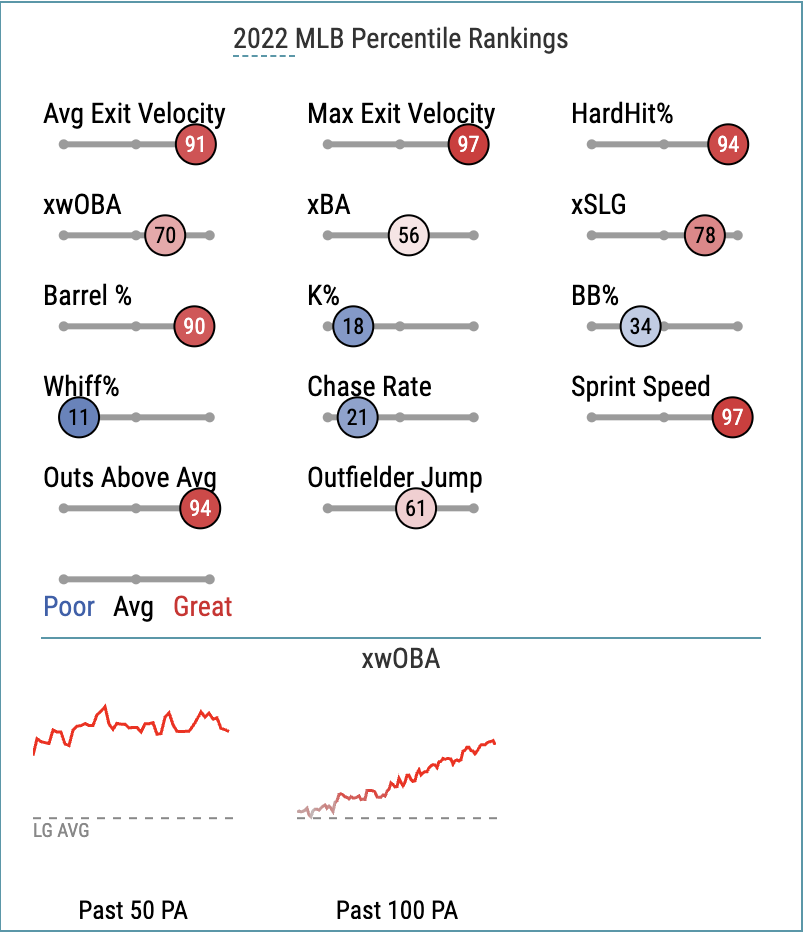
Featured below are Baseball Savant’s 2022 MLB Percentile Rankings for Julio Rodríguez:
The one thing Rodríguez needs to work on is his plate discipline. Rodríguez’s outside zone swing rate is sitting at 36.8%, while the league average is at 32.3%. Also, Rodríguez makes contact with 69.3% of pitches while the league average is higher at 76.6%. When looking at Rodríguez’s plate discipline stats, all of them are below average/subpar. If Rodríguez can lower his chase rate, his K rate will lower, and he will only get better.
While there are many AL Rookie of the Year candidates, the Seattle Mariners outfielder seems t have the best chance to win the award. Julio Rodríguez is putting the league on notice with his raw power, flashy defensive plays, and raw speed. I fully expect to see the young rookie from the Dominican Republic win the AL Rookie of the Year award this season. Julio Rodríguez has a bright future ahead of him after already being selected t0 his first All-Star game and Home Run Derby. Bravo, Julio!
A few interesting statistics about Julio Rodríguez:
- Youngest All-Star in MLB history
- 6th Seattle Mariner Rookie to be selected to an All-Star game
- AL Rookie of the Month Winner for BOTH May and June
- Top 3% of the league in Max Exit Velocity (115.0 %)
- Top 6% of the league in HardHit% (50.6%)
- Top 9% of the league in Exit Velocity (92.1%)
Matthew Suh is the founder of Fresh Coast Sports as well as a staff writer for Fresh Coast Sports, Talking Points Sports, and The Press Box. While Matthew covers all sports, including the NFL, NBA, and MLB, he tends to focus on writing about the MLB. Questions about the MLB or baseball? Follow or DM Matthew on Twitter @matthewsuh for inquiries!
-
Shane McClanahan in a start against the Angels earlier this season. Tampa Bay — The Cy Young Award is a prestigious award that is given to the best pitchers in Major League Baseball – one for an American League Pitcher and one for a National League Pitcher. Former Cy Young Award winners include Corbin Burnes, Jacob DeGrom, Justin Verlander, Max Scherzer, and many other all-time great pitchers. Surprisingly, the AL Cy Young frontrunner this year is Shane McClanahan, starting pitcher for the Tampa Bay Rays. Compared to last season, McClanahan has stepped up his game and leads the MLB in almost every pitching category.
This season, McClanahan owns a stellar 1.77 ERA and a 0.83 WHIP with 8 wins and 3 losses. What helps McClanahan maintain a low ERA and WHIP is his ability to strike out a lot of batters while limiting the number of walks he issues per game. In terms of K/9, McClanahan is second in the MLB only behind Dylan Cease, with 12.1 K/9. For reference, the league average K/9 is 8.46. Also, he is in the top 3% of the league with a 35.7% K rate and only a 4.6% BB rate which is in the top 8% of the league. On the season, batters are only hitting .183 against McClanahan.
McClanahan’s pitch arsenal is a huge reason for his high strikeout rate. In terms of pitch usage, he throws a 4-seam fastball (35.9%), curveball (25.5%), changeup (22.6%), and a slider (15.9%). Generally, it’s impressive when a starting pitcher can throw 100 mph but Shane McClanahan has made it look all too easy this season (he reached 101 mph once this season as well). After throwing 100 mph, McClanahan then slows batters down with a curveball at 86 mph or a hard changeup at 90 mph. His most effective pitch is his curveball which has a 44.7% K rate, and batters are only slashing .133/.161/.200 against it.
So how did Shane McClanahan take such a huge leap from last year’s rookie season? For starters, he dropped his hard-hit rate by 13.8%, which has reduced the number of batters who hit the ball hard against McClanahan. By reducing this number, he has also lowered his ERA. Furthermore, McClanahan’s K rate rose 8.4%, and his whiff rate rose 4.3%. The league average K rate is 22.2%, and McClanahan is well above that number with a K rate of 35.7% – which shows how dominant McClanahan is.
While the Cy Young Award is not based on improvement but rather on who is the best pitcher, McClanahan has shown that he is both the most improved and best pitcher in the American League. From McClanahan’s above-average K% to his low BB%, it can be clearly seen that McClanahan is most deserving of this award. In the month of June, he only allowed 9 runs! The Former 1st round pick out of the University of South Florida should be proud of his accomplishments in only his 2nd season! In the future, I expect Shane McClanahan to keep putting on a show every time he takes the mound (with some minor regression expected).
Matthew Suh is a staff writer and contributor for Talking Points Sports. While Matthew covers football, basketball, and baseball, he tends to focus on writing about the MLB and baseball Questions about the MLB or baseball? Follow or DM Matthew on Twitter @matthewsuh for inquiries. Be sure to follow @TalkingPointsSports on Twitter for the latest sports content!
-
Jorge López celebrating with Robinson Chirinos after closing a game. Quick Notes:
- League-average WHIP (walks and hits per inning pitched) is around 1.24; anything LOWER is good anything HIGHER is not good.
- League-average ERA (earned run average) is around 3.77; anything below is GREAT anything above is NOT great.
- Slash line is a colloquial term used to represent a player’s batting average, on-base percentage, and slugging percentage (in that order).
Baltimore — Josh Hader, Edwin Diaz, and Emmanuel Clase are names that come to mind when one thinks of an elite closing pitcher. However, what if I were to tell you that Jorge López is having a better season (statistically) than the pitchers mentioned above? Ever since the Orioles moved López to the bullpen last season, he has excelled as their closer. This is a success story of Jorge López and his transformation from a struggling starting pitcher to the Orioles’ closing pitcher and anchor of their bullpen.
Jorge López was drafted in the 2nd round with the 70th overall pick by the Milwaukee Brewers in the 2011 draft. López made his major league debut 4 years after he was drafted in 2015. After spending time with the Brewers as a starter and long-relief pitcher, López was traded to the Kansas City Royals. After a disappointing 3 seasons with the Royals, they designated López for assignment, where he was later claimed off waivers by his current team, the Baltimore Orioles.
Once again, seeing time as both a starting pitcher and relief pitcher, López struggled mightily with the Orioles as a starter. As a starter, over the past 2 seasons, López has put up an ugly ERA of 6.34 and 6.07. Also, in that span, López had a career-low K % of 16.1%. His struggles as a starting pitcher lead the Orioles to move him to the bullpen – where he has found the most success. After changing positions and moving to the bullpen last season, López has been one of the most dominant closers in baseball.
On the season, Jorge López owns a spectacular 0.79 ERA, 0.84 WHIP, and 11 saves in 34.1 innings pitched. Amongst closing pitchers this season, López owns the second-lowest ERA, with Clay Holmes of the New York Yankees leading closers in ERA. Furthermore, opposing batters who face López have a batting average of .134.
What allows López to close games so effectively is his hard sinker and slow curveball. López’s repertoire consists of a sinker (51.9% of the time), curveball (19.8% of the time), changeup (16.4% of the time), slider (9.5% of the time), and a 4-seam fastball (2.3% of the time). López’s hard sinker allows him to induce groundballs 61.7% of the time and strike out batters 23.4% of the time. On average, López will throw his sinker around 98 mph with a max velocity of 100.1 mph. Pairing that 98 mph sinker with a slow 84.4 mph curveball is absolutely lethal. Opponents are slashing just .118/.111/.118 against López’s curveball.
The decision to move López to the bullpen proved to be beneficial for both the Orioles and Jorge López. López went from an ERA of 6.07 to 0.79 and a WHIP of 1.63 to 0.84. Also, his K% significantly rose from 20.2% last season to 25.4% this season. Last season, hitters had a batting average of .234, which is down significantly to a minuscule .134.
Jorge López’s strong play through the first part of the MLB season makes him a strong candidate to pitch at his first all-star game. All of López’s metrics and statistics back up his case to be an All-Star this season. From a struggling starting pitcher to a lights-out closer, López has proved to be much better out of the bullpen than a starter. López has all the components to be the league leader in saves – he just needs more opportunities. As the Orioles’ starters begin to get more experience in the MLB, I can see López getting many more save opportunities and excelling in his role as their closer.
Matthew Suh is a staff writer and contributor for Talking Points Sports. While Matthew covers football, basketball, and baseball, he tends to focus on writing about the MLB and baseball Questions about the MLB or baseball? Follow or DM Matthew on Twitter @matthewsuh for inquiries. Be sure to follow @TalkingPointsSports on Twitter for the latest sports content!
-
Quick Notes:
- League-average WHIP (walks and hits per inning pitched) is around 1.24; anything LOWER is good anything HIGHER is not good.
- League-average ERA (earned run average) is around 3.77; anything below is GREAT anything above is NOT great.
- Slash line is a colloquial term used to represent a player’s batting average, on-base percentage, and slugging percentage (in that order).
Atlanta — One of the hardest tasks as a pitcher in the MLB is striking a batter out. While it may be easy to throw strikes, finishing the batter off by striking them out is about as difficult as it gets for pitchers. While many may think of Jacob Degrom and Max Scherzer as dominant strikeout leaders, the current league leader in K/9 (strikeouts per nine innings) is Spencer Strider, a rookie starting pitcher for the Atlanta Braves. Strider is leading pitchers in a lot of strikeout statistical categories and is a name that should be watched over the next couple of years.
Spencer Strider was selected in the 2020 Amateur Draft with the 126th overall pick by the Atlanta Braves and is a promising young pitcher (only 23 years old). Strider is practically new to the MLB this season as he only made 2 appearances in the last season and only pitched 2.1 innings. To start the 2022 season, Strider had been mostly used as a relief pitcher until a few weeks ago when he took the 5th spot in the Braves rotation and hasn’t looked back.
This season, Strider has a 2.35 ERA, and 1.12 WHIP in 38.1 innings pitched with 2 wins and 2 losses. Strider has amassed 57 strikeouts to 19 walks leading to a whopping 36.8 K% (top 1% in the league) and a 12.2 BB%. Strider has a great K/BB ratio at 3.00, meaning that for every 3 batters he strikes out, he walks 1 batter (3Ks/1BB). Surprisingly, Strider also leads the whole league in K/9 (strikeouts per nine innings) at 13.38.
One of the leading factors for Strider’s strikeout success is his pitch selection. Strider throws his 4-seam fastball (71.2% of the time), slider (23.6% of the time), and changeup (5.2% of the time. Strider throws an above-average fastball at around 98.3 mph, which adds to his strikeout totals. Generally, Strider overpowers hitters with his fastball early in the count and then puts them away with his 85.4 mph slider – for hitters, that’s a 13 mph difference between the fastball and his slider.
One impressive metric by the 23-year-old rookie is his whiff %. In the 2021 season, Strider had a whiff % of 20.8%, and this season, he has a whiff % of 34% (13.2% increase). Spencer’s ability to get batters to whiff on his pitches only makes it easier for him to strike out batters. Another impressive stat by Strider is his opponent’s batting average which is sitting at a measly .176 – which means that opposing hitters do not get very many hits when facing him.
Spencer Strider is pitching like an elite ace right now and shows no signs of slowing down. The Atlanta Braves should be more than pleased with Strider as he was selected in the 4th round with the 25th pick. Although some statistical regression is due, with Strider’s elite fastball and a good slider, he should continue striking out batters and leading pitchers in all strikeout statistical categories. Within a few years, I can see Strider developing into an ace and making his first all-star game appearance. Both Spencer Strider and the Atlanta Braves have a bright future ahead as Strider continues to gain MLB experience and play against the best.
Matthew Suh is a staff writer and contributor for Talking Points Sports. While Matthew covers football, basketball, and baseball, he tends to focus on writing about the MLB and baseball Questions about the MLB or baseball? Follow or DM Matthew on Twitter @matthewsuh for inquiries. Be sure to follow @TalkingPointsSports on Twitter for the latest sports content!

At Fresh Coast Sports, we live and breathe the world of sports. We are a premier online destination for comprehensive sports journalism, bringing you the latest news, in-depth analysis, and captivating stories from the wide spectrum of athletic endeavors due to our committment to excellence in sports journalism.







 Fresh Coast Sports | An evolving sports media company breaking boundaries by providing daily sports news, athlete profiles, and data analysis.